

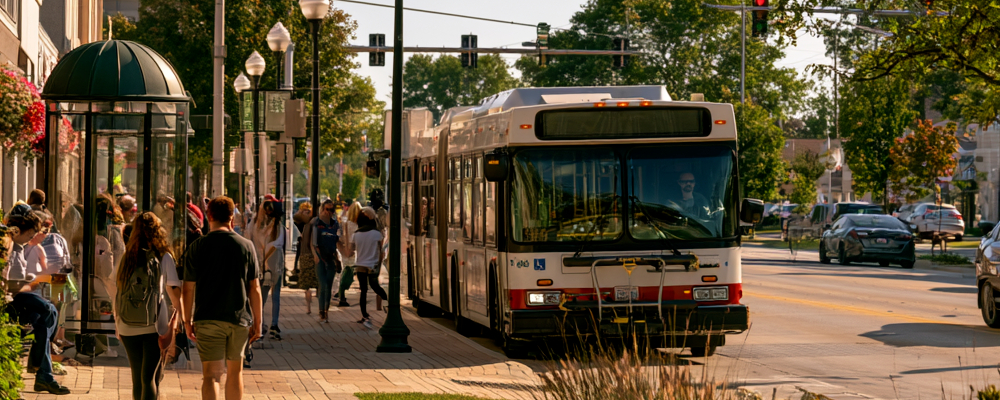
Injured in an accident involving a bus in Park Ridge, IL? Patrick Quinn is an experienced bus accident lawyer in Park Ridge, Illinois who can help you recover monetary compensation.
A bus crash in Park Ridge can involve a CTA route heading toward the Blue Line, a Pace suburban coach on Touhy Avenue, a District 64 school bus on a morning route, or an O’Hare shuttle cutting through the northwest side.
Each of these vehicles operates under a different set of rules, carries a different type of insurance, and answers to a different set of lawyers when something goes wrong.
That is why injured passengers, pedestrians, and drivers often find themselves facing more than just a physical recovery. They are up against a transit agency, school district, or private carrier with dedicated risk management teams whose job is to reduce what your claim is worth.
Those teams start working the same day of the crash.
Our skilled Park Ridge bus accident attorneys step in early, put the responsible entity on notice, and take control of the timeline so you can focus on getting better while we handle everything else.
Contact us today for a free case evaluation.
Why Bus Accident Claims Require a Local Attorney
Bus accident cases in Park Ridge are far more complex than a typical car collision. Whether a CTA bus struck your vehicle, a Pace coach failed to yield, or a school bus made a negligent turn, the entity behind that bus already has investigators, adjusters, and defense attorneys working before you have left the hospital.
At Quinn Law Injury & Accident Lawyer, we know how Cook County courts handle transit claims, how public agencies work to limit financial exposure, and how to move quickly to secure evidence before it disappears.
That combination of local knowledge and legal experience is what turns an overwhelming situation into a real recovery.
What Types of Bus Accidents We Handle
Our firm represents injured passengers, pedestrians, and motorists in accidents involving every category of bus operating in and around Cook County. Our Park Ridge bus accident lawyers handle claims involving:
- CTA and Pace suburban bus routes
- Park Ridge–District 64 and Maine Township school buses
- Charter and privately operated tour buses
- Airport shuttles serving O’Hare International Airport
- Church, nonprofit, and private organization buses
What to Do After a Bus Accident in Park Ridge
The steps you take in the hours immediately after a crash are critical to both your health and your legal claim. Transit authorities and private bus companies begin building their defense quickly, here is how to protect yourself.
Call 911 and Seek Medical Attention
Contact emergency services so Park Ridge police can document the crash and generate an official report. Seek a medical evaluation that same day, even if you feel fine.
Conditions like spinal compression, traumatic brain injuries, and internal bleeding may not produce obvious symptoms until hours or days later, and gaps in treatment can be used against your claim.
Photograph the Bus, the Scene, and Your Injuries
Use your phone to capture the bus number, route sign, license plate, and driver identification before anything changes. Photograph road conditions, the crash scene, and any visible injuries, because photographic evidence taken close in time to the accident is difficult for an insurer to dispute.
Collect Witness Contact Information
Ask other passengers and nearby bystanders for their names and phone numbers before they leave. Note any security cameras at nearby businesses, intersections, or bus shelters. Onboard footage and external recordings are routinely overwritten within weeks.
Do Not Give a Recorded Statement to the Bus Company
Transit adjusters and private bus company representatives often reach out quickly to gather a recorded statement. Those recordings are routinely used to reduce or deny claims. Do not agree to one before speaking with an attorney.
A tactic our Park Ridge personal injury lawyers see repeatedly from CTA and Pace claims adjusters after a bus crash in Park Ridge is calling an injured passenger within 24 hours to request a recorded statement about how they were seated or whether they were holding a handrail.
We have found that these calls almost always happen before the passenger has seen a doctor or reviewed any onboard video, which puts them at a disadvantage before they even understand the extent of their injuries.
We instruct clients to decline that call entirely and let our office handle every conversation with the transit agency or bus company from that point forward.
Who Can Be Held Liable in a Park Ridge Bus Accident?
A bus crash rarely involves just one responsible party. Our investigation examines every possible source of liability so no avenue for compensation is overlooked.
- The bus driver: A driver who speeds, runs red lights, uses a phone, or operates the vehicle while fatigued or impaired can be held personally liable.
- The transit agency or bus company: CTA, Pace, and private carriers must screen, train, and supervise their drivers. Failure to do so creates direct liability for the agency itself.
- The school district: Districts that skip required vehicle inspections or retain unqualified drivers may share responsibility for injuries to students and third parties.
- A maintenance contractor: A third-party service company that performs defective repairs or overlooks a critical defect can be held accountable when those failures lead to a crash.
- A third-party motorist: When another driver’s negligence caused the bus to crash, that driver and their insurer become part of your recovery.
- A vehicle or component manufacturer: Defective brakes, faulty tires, or malfunctioning safety systems can shift liability to the company that built the part.
What we see consistently in bus accident investigations across Cook County is that the transit agency or bus company points to the driver alone as the sole cause, hoping to avoid scrutiny of its own training and maintenance records.
We routinely find that a closer look at driver personnel files, inspection logs, and dispatch schedules reveals a pattern of skipped inspections or a driver who should never have been on the route that day.
Building that fuller picture is often what brings a second responsible party, and a second source of insurance coverage, into the case.
How Bus Claims Differ from Car Accident Cases
Buses that carry passengers for hire, including CTA routes, Pace lines, and charter operators, are classified as common carriers under Illinois law. That designation means they owe passengers the highest duty of care, a stricter legal standard than what governs an ordinary driver.
Claims against public entities like the CTA, Pace, or a school district are also governed by the Illinois Tort Immunity Act, a state law that restricts when and how you can sue a government agency. It imposes strict written notice requirements with no grace period. If you miss the deadline, your claim is permanently closed.
Filing Deadlines for Park Ridge Bus Accident Claims
These deadlines are not negotiable. Missing a notice of claim filing ends your right to seek compensation, regardless of how serious your injuries are.
| Bus Type | Notice of Claim Deadline | Lawsuit Filing Deadline |
| Private or Charter Bus | None required | 2 years from the accident |
| CTA | 6 months (written notice required) | 1 year from the accident |
| Pace / RTA | 1 year (written notice required) | 1 year from the accident |
| Public School District | Varies (Tort Immunity Act applies) | 1 year from the accident |
The statute of limitations is the court-imposed deadline by which you must file a lawsuit. For public bus accident claims, this window is far shorter than for standard car accidents. If you are unsure which category applies to your case, contact our office immediately.
Why Bus Accident Injuries Are Especially Severe
Most crashes trace back to driver error: rushing to stay on schedule, ignoring signals, failing to check mirrors, or operating while fatigued or distracted. Deferred maintenance, such as worn brakes or bald tires, is also a frequent contributing factor.
The resulting injuries are often severe because buses can exceed 20,000 pounds and most passenger areas lack seatbelts. The force generated in a collision at even moderate speeds can cause:
- Traumatic brain injuries and post-concussion syndrome
- Cervical and lumbar spine fractures or disc herniations
- Broken bones in the arms, hips, legs, or pelvis
- Internal organ damage from blunt force impact
- Permanent scarring and disfigurement
Not sure whether you have a claim? Contact our Park Ridge bus accident lawyers today and we will evaluate your case at no charge.
What Compensation You Can Recover After a Bus Crash
The purpose of a bus accident claim is to restore the financial position the accident took from you. Recoverable damages may include:
- Emergency care, hospitalization, and ongoing medical treatment
- Future medical costs including rehabilitation, physical therapy, and long-term care
- Lost wages and income missed during your recovery period
- Reduced earning capacity if your injuries prevent a return to your prior work
- Physical pain, emotional distress, and loss of enjoyment of life
- Compensation for permanent disability or disfigurement
- Wrongful death damages for surviving family members, including lost financial support and funeral costs
What If the Insurer Claims You Were Partly at Fault?
Illinois follows a modified comparative fault rule, which allows you to recover compensation even if you bear some responsibility for the accident, provided your share is 50% or less. Your total recovery is reduced proportionally by your percentage of fault.
Transit agencies and private carriers use this rule aggressively, claiming injured passengers were standing, not holding a handrail, or otherwise distracted. We build a complete factual record early in the process to shut those arguments down before they gain traction.
One pattern we see often in Park Ridge bus accident claims is a transit agency’s insurer arguing that a standing passenger was comparatively at fault for not holding a handrail, even on routes like CTA and Pace lines where standing room is expected and handrails are not always within reach during sudden stops.
We counter that argument with the vehicle’s own onboard camera footage and prior complaint records showing the same stop or turn has caused similar falls before.
When we can show the agency knew about the hazard and did not correct it, the comparative fault argument tends to lose most of its weight.
How We Investigate and Build Your Bus Accident Case
We begin working the moment you hire us, because the most valuable evidence in a bus crash has a short window before it is gone.
Secure Onboard Video Before It Is Overwritten
We immediately send legal hold notices to CTA, Pace, school districts, and private operators demanding preservation of camera footage, GPS trip data, and electronic vehicle records. Many agencies overwrite footage automatically on a short cycle.
Obtain Government Records Through FOIA Requests
We file Freedom of Information Act (FOIA) requests, formal legal demands that require government agencies to produce internal documents, to obtain driver employment files, vehicle maintenance logs, safety inspections, and records of prior complaints.
Reconstruct the Crash with Independent Experts
For contested liability cases, we work with accident reconstruction specialists who use physical evidence, onboard data, and video analysis to establish exactly how the crash occurred. Their independent findings directly counter the narrative the defense will present.
Project Long-Term Losses with Medical and Economic Experts
We engage specialists to calculate the full future cost of your injuries, including anticipated surgeries, ongoing therapy, and years of reduced income. Insurers push early settlements because most victims underestimate what they will need later. We make sure you do not.
Why Clients in Park Ridge Choose Quinn Injury & Car Accident Lawyer
When you hire us, your case is handled by an experienced attorney from the first call through the final resolution. We do not pass files to junior associates or process cases in bulk. The attorney you speak with on day one is the one who fights for you.
We have a record of significant recoveries for bus accident victims throughout Cook County and represent every client on a contingency basis, meaning you pay no attorney fees unless we win.
Areas We Serve near Park Ridge
Our firm represents bus accident victims across the northwest suburbs and Chicago’s Northwest Side, including Park Ridge, Niles, Des Plaines, Edison Park, Norwood Park, Rosemont, Harwood Heights, Glenview, and the surrounding Cook County area.
Frequently Asked Questions about Park Ridge Bus Accidents
Do CTA Passengers Have Different Legal Rights Than Pedestrians Struck by a CTA Bus?
Passengers benefit from the higher common carrier standard of care, but pedestrians and other motorists can also pursue compensation when a CTA driver’s negligence caused the crash. The legal approach and applicable rules differ depending on how you were involved.
What if I Left the Scene Without the Bus Number or Driver’s Name?
We can typically identify the specific vehicle and driver using your account of the time, location, and direction of travel combined with the transit agency’s dispatch and scheduling records.
Can a Parent File a Bus Accident Claim for an Injured Child?
Yes, a parent or legal guardian can pursue a personal injury claim on behalf of a minor, and Illinois law generally extends filing deadlines until the child reaches adulthood.
Will My Park Ridge Bus Accident Case Go to Trial?
Most claims resolve through settlement before trial, but we prepare every case as though a jury will decide it. That preparation is often what moves transit agencies and insurers toward fair offers.
What Does It Cost to Hire Quinn Injury & Car Accident Lawyer for a Bus Accident Case?
We handle bus accident cases on a contingency fee basis: no upfront costs, and no attorney fees unless we successfully recover compensation on your behalf.
Should I Accept an Early Settlement Offer from the Bus Company?
No, initial offers rarely account for your long-term medical expenses or income losses, and accepting one permanently ends your right to seek additional compensation for the same accident.